Sunday, April 24, 2016

Week 2 (4/11-4/15) Water Pump

One of the the Tugs was having an issue with the water pump fan mounts coming loose. We were able to remove the fan and confirm that no damage had been done to the equipment. While reinstalling the fan we torqued the fan into place and applied a dab of Lock Tight to ensure that it would not bring itself loose again.


Hours: 40
Running Total: 72

Week 1 (4/5-4/8) Power Steering Flush

Nothing too exciting for the first week of the quarter at work. We flushed the power steering on one of our fueling trucks. The process was pretty straight forward. We placed the front axle on jack stands so that the front wheels hovered a few inches above the ground. We detached the return hose on the bottom of the filter housing and exercised the steering wheel from full left to full right until the fluid had been completely drained from the system. We installed the new filter and filled the system with fluid while exercising the steering wheel to eliminate air bubbles in the system.

Hours: 32
Running Total: 32

Thursday, March 31, 2016

Week 12 (3/21-3/25) Pressure Relief Valve Testing


A very important feature of the fueling trucks is the ability to relieve pressure while the pump is running and the fuel has no where to go. The primary pressure relief valve is set to relieve pressure at 40psi. If this valve fails a secondary pressure relief valve will kick open at 50psi. These valves have to be tested and adjusted. We use a calibrated pressure gauge on the fueling nozzle to ensure that the pump panel is accurate and the relief valve opens at the appropriate pressure. The pump panel gauge is allowed 3psi difference from the calibrated gauge. These pressure gauges on the panel get the readings from venturis located on the fueling pipes after the pump and can be adjusted to match the calibrated gauge. After the primary pressure relief passes a bypass valve is turned to test the secondary relief system. Kind of a neat process to test the trucks.


(Left) Calibrated gauge hooked up to the nozzle on the "recirc" port on the tank.

(Right) The nozzle is then closed to 95% position and 40psi is achieved as the primary releases. If the primary is <40 or >37 it must be adjusted.


 (Far Left) Bypass valve
(Above) Venturi with adjustable fitting so that gauge at panel can be calibrated.

Hours: 40
Total for Winter 2016 Quarter: 460


Week 11 (3/14-3/18) Fuel Storage Water Defense Testing

We have an offsite fuel storage facility for our company that we refer to as the "fuel farm". The farm requires various testing on a monthly, quarterly, semi-annual, and annual basis. This particular week we performed quarterly checks at the farm. Part of this test is to ensure that the water defense is functioning properly. On an annual check we would plumb in a hand pump and pump water into the filter vessel (which has a VERY expensive fuel/water filter on the outgoing port preventing the water from escaping into the rest of the system) until the water level in the sump of the filter housing reaches the water sensor and shuts down the entire farm resulting in a doomsday alarm sounding until we reset the system and drain out the contaminated fuel in the filter housing. Luckily, this being a quarterly check, we only had to test the sensor using the test port on the side of the sump which houses the water sensor. This sensor can be isolated from the rest of the pump system while it is running. We then add a small amount off water to the sensor housing until the alarm sounds and we confirm it is in working condition. Once you learn all of the pump components it becomes very easy to operate this system. 
 Hours: 40
Running Total: 420

Week 10 (3/7-3/11) Starter Replacement

Nothing too exciting this week. We had a starter going our on one of the fueling trucks. This is a 2006 International 4200. The truck was beginning to have trouble starting in the morning. My first thought was there was a parasitic draw on the batteries throughout the night. However, the truck began to have the issue throughout the day even after running for over an hour. I started by grabbing the trusty multi-meter and performed a starting-charging system test. The batteries had adequate voltage (12.9) and dropped to a mere 10.1 upon starting. The alternator was returning an acceptable 14+ volts to the batteries (unfortunately I did not have an amp clamp handy to check amperage). After removing the starter we took it to Romaine Electric in town who confirmed our suspicion. The trucks start 10-15 times per day, it's a rough life for them out at the airport.


Hours: 20
Running Total: 380

Week 9 (2/29-3/4) Brake Drum

Got an email this particular week that a beltloader was "not moving forward." Took off the rear end to find that on one side the brake shoes had... well, exploded. There was chunks of pad inside of the drum. Luckily, my partner has a great deal of experience with finding on miscellaneous equipment and identified the brake rear end off of a 70's era Ford F250. After some patience at Napa and careful measuring we were able to install the correct shoes (in the proper position this time mind you, as whoever had done the previous brake job installed them incorrectly). Problem solved, pretty easy week.

 Displaying IMAG00031.jpgDisplaying IMAG00031.jpg
Hours: 40
Running Total: 360

Tuesday, March 22, 2016

Week 8 (2/22-2/26) Hardi Pump Rebuild


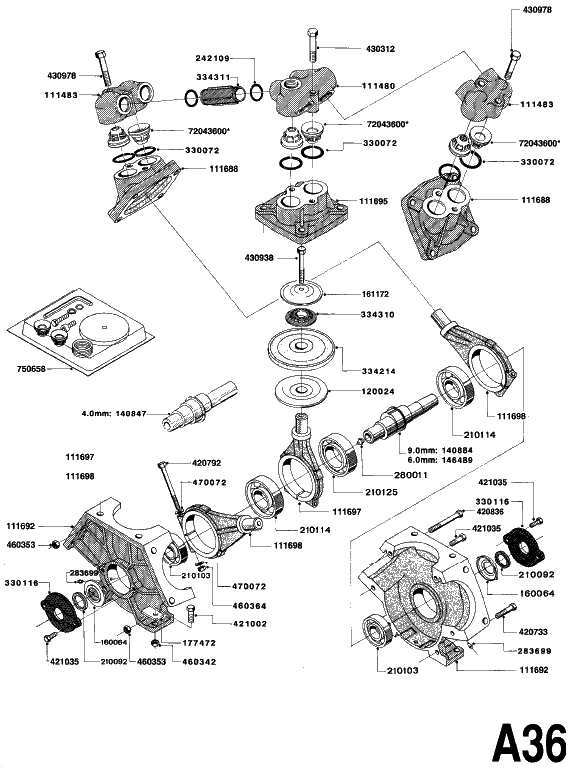
We were told that the pump was leaking on our de-icing truck at the airport. This piece of apparatus is incredibly important especially when it is still frosty in the morning. This particular pump hands whats called a Type IV anti-icing fluid that has the consistency of molasses. We contacted the truck manufacturer and got our hands on a parts diagram. One of the connection pipe inlets (334311) had burst and was draining the fluid tank.
We ordered the surrounding components and all gaskets and o-rings that would be removed. 


Hours: 40
Running Total: 320