Tuesday, February 23, 2016

Week 5 (2/1-2/5) Glow Plug Timer Relay


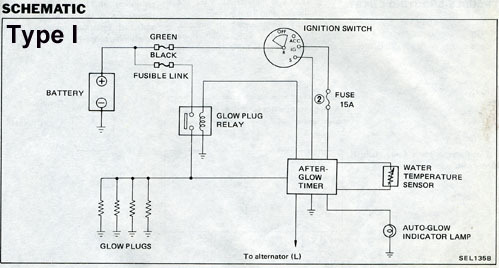
Got my hands on a NGK glow plug timer relay. I understand the basic ins and outs of how it works and it's role. However, I'm not fully understanding how the circuit "knows" how long to engage the timer. Perhaps we could expand on this in class? 


I am not grasping the workings of this schematic. Any input would be greatly appreciated.


Total Hours: 40
Total for Winter Qtr: 200   


Monday, February 22, 2016

Week 4 (1/25-29) Butterfly Valve Replacement

Back at the end of January, we were told that the handle for the bottom load valve on one of the fueling trucks felt "too loose" and appeared to be leaking. Upon further investigation we found that the handle was swinging freely not attached to anything internally. After isolating the bottom load piping we proceeded to tear into the valve. Unfortunately, I did not take much pictures due to the fact that we were dealing with quite an amount of jet fuel and the replacement of the valve was time sensitive. The Wet-R-Dri Valve we replaced was the detent model, difference being is that one of them has spring loaded bearing that will lock the valve in either position and can be adjusted to completely lock out the valve. The valve had been forced the wrong direction causing the valve to break loose from it's home and becoming lodged further up the pipe.

Not a very exciting post I know, but trying to remember to put down what I am doing to take pictures of it has been a bit of a struggle.
 

Hours for the week: 40
Running Total: 160


Monday, January 25, 2016

Week 3 (1/18-22) Batterey Box Re-Wire

Long story short, the battery box on our lift truck caught fire. The glow plug relay was the start of the fire and it spread to other components within the compartment which ultimately fueled it's demise. I was lucky enough to be trusted to re-wire the compartment. Luckily, we had the electrical schematic in the shop. After a LOT of clean up, splicing, heat shrinking, crimping, and zip-tying, the equipment is fully functional again. 


Here is the schematic. My confusion is how did the relay build up enough heat to catch fire but not draw enough to blow the fuse. My theory is that they bumped the emergency stop button (a VERY common thing to happen) and spent the usual 10-20 minutes trying to start it. By clicking on the ignition, the timer relay kicks into effect and only stays on for a preset time. Could a repeating of this process of on/off/on/off/on/off cause enough heat for it to catch fire? It would make sense that no more than 50amps are getting through, and if this timer relay is exposed to an extended period of voltage/amperage, could it truly catch fire or am I going down the wrong rabbit hole?

Some new ends I installed. Heat shrinking water proof hardware is just the best.

Hours: 40
Running total for Fall: 120

Week 2 (1/11-15) Fuel Level Sending Unit

We had a complaint of a fuel gauge not working appropriately on one of our pieces of equipment at the airport. Once we got it into the shop I grabbed the shops trusty multi-meter. We had an appropriate supply to the sending unit as well as a sufficient ground. I then started the task of removing the sending unit to investigate it further. It was simply a variable resistor attached to an arm with a flotation device on the end. I hooked up the test leads to the sending unit to find that the resistor was working properly; you could even watch the fuel gauge rise and fall correctly by moving the arm. I realized that the sending unit was not installed properly, the arm rubbing on the baffle inside of the tank and had gotten stuck this time around. So, after making a few adjustments to the mounting bracket, the gauge works just fine now. 

Hours for the week: 40
Running total for Winter: 80

Sunday, January 10, 2016

Week 1 (1/4-8) Axle Nut Removal "Tool"

This first week we had a piece of equipment in for a routine PM. We lifted the front end and checked for play in the front wheels and found quite a bit of slop. After removing the wheel and cap we found an axle nut that was 2 1/2" in diameter. We did not have the right tool to remove it, but we decided to look around the shop before we gave up and drove to Napa to buy the socket. We found an old steel seat bracket in the "bone bucket" and decided to grab the angle grinder and the almighty welder. We came up with the most simple yet effective design, made our measurements, ground down the edges, and it worked perfectly. Yes, it does have the appearance of roadkill, but it got the job done in half the time of driving to Napa and costed the shop practically nothing. 

In the end we found the bearing was shot as the seal had been compromised and the water damage was too severe.

Scrap metal should never just be tossed. It can be very useful 
Ain't it pretty? 

Some hi-tech shenanigans.

Shop Hours: 40
Total for Fall Quarter: 40

Tuesday, December 15, 2015

Leaking Reel 12/7-11


One of our fueling trucks was dripping fuel as it filled the aircraft. My co-worker and I could not find any marking to indicate the brand of reel so that we could order new parts for it. We called the the company that we lease the trucks from and after a good week of riding a merry go round of phone tag we managed to get the replacement gasket for it. I decided to post pictures because I have not seen a gasket like this before and found it to be pretty interesting set up. 
The section of pipe that "swivels" if you will was dripping. The flange on the 90 degree pipe (right side) bolts to the reel below on the right hand side. The inner shaft rotates freely with the reel and is lubricated by approved grease. 


A clearer picture on the left of the two piece mount where the pipe bolts to the assembly, the inner shaft aligns with the inner liner of the pipe and spins against the gasket that was leaking. 


The right picture shows the reel resting in its seat with the top of the mounting bracket removed. 


The upper piece of the mounting bracket showed signs of abrasion from the reel.


Below left you can see where the gasket rested and the shaft of the reel made contact. Below right is the two piece gasket. The o-ring rests inside of the gasket and fits snugly in its seat. You cannot see it but the gasket had a small tear in it causing the leak. 


We finally managed to get the proper replacement gasket and I am glad to say that the truck is leak free now. 


Hours for this week: 32
Total for Fall Qtr: 340
Saturday, December 5, 2015

11/30-12/4 Engine Brake (Jake Brake)

Removed the valve cover off of one of the engines at school that is equipped with a Jake Brake. We ran the engine but could not get the engine brake to engage, so we disconnected the solenoids on one side of the engine that are used to activate the brake. We then placed wire leads on the solenoid and activated it manually to see the brake work first hand. It was a very useful demonstration for me as I never truly understood how the brake was activated/de-activated. This video animation caused the light bulb to finally illuminate. 


Hours: 34
Running Total for Fall Qtr: 308